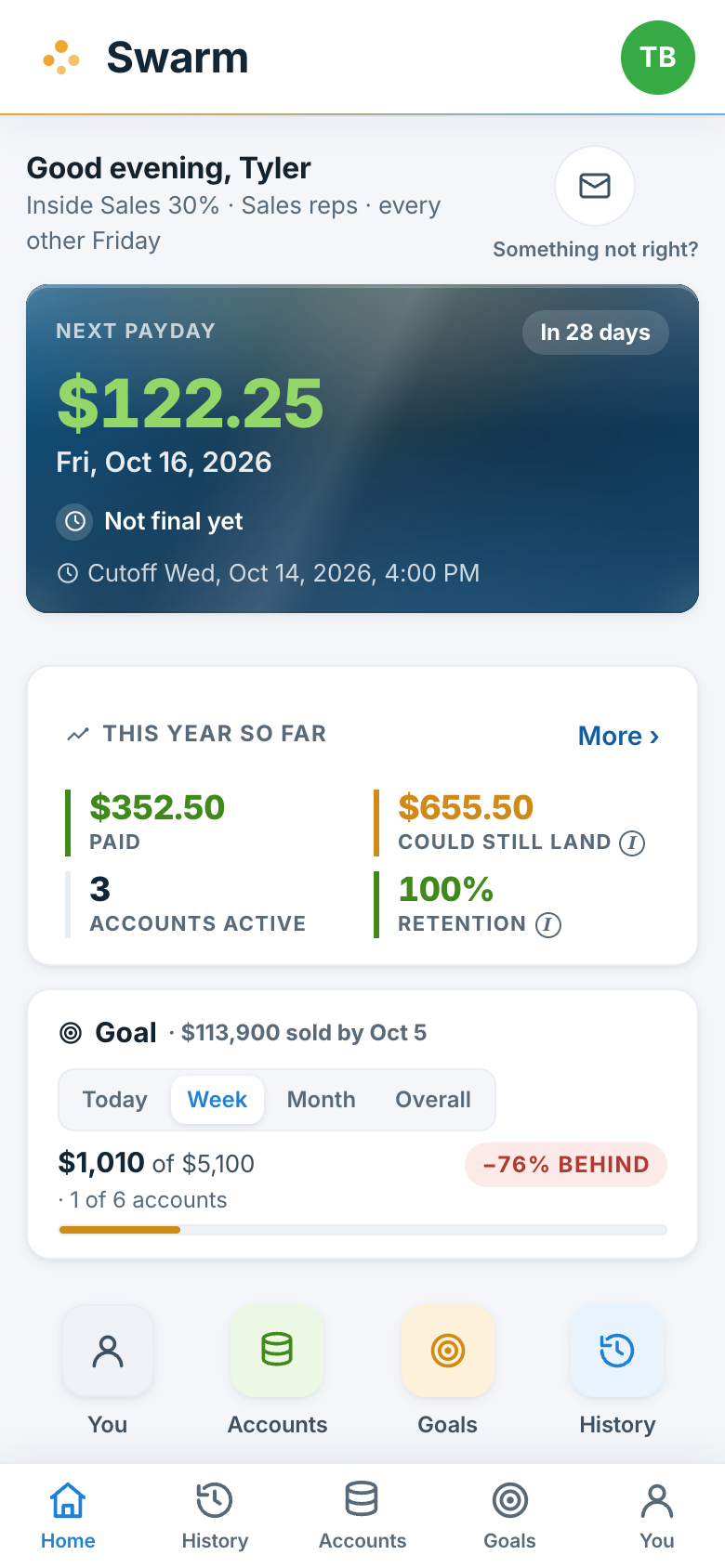
Swarm reads the sales already in your CRM, pays each one exactly the way your pay plan says, and locks every number the moment it is earned. Then it runs payday, and every rep sees their own check explained line by line.
Your details are already filled in. Choose whatever works and you're done.
You can also open the scheduler in a new tab.
Pest-control pay is not simple. A sale pays out in pieces over months. Rates climb with the season and settle when it ends. Two reps split an account. A leader earns on the team's sales. A customer cancels after the rep was already paid.
Every one of those rules lives in a spreadsheet, and every Friday the questions start. Is my split in this one? Did the new rate hit last month? Why is this check lower than the last one? One wrong cell, and the trust is gone for the season.
Swarm is the part in the middle. It does the math from your CRM's own records, locks each number, and shows every rep exactly where their check came from.
Everything else in Swarm follows from these three.
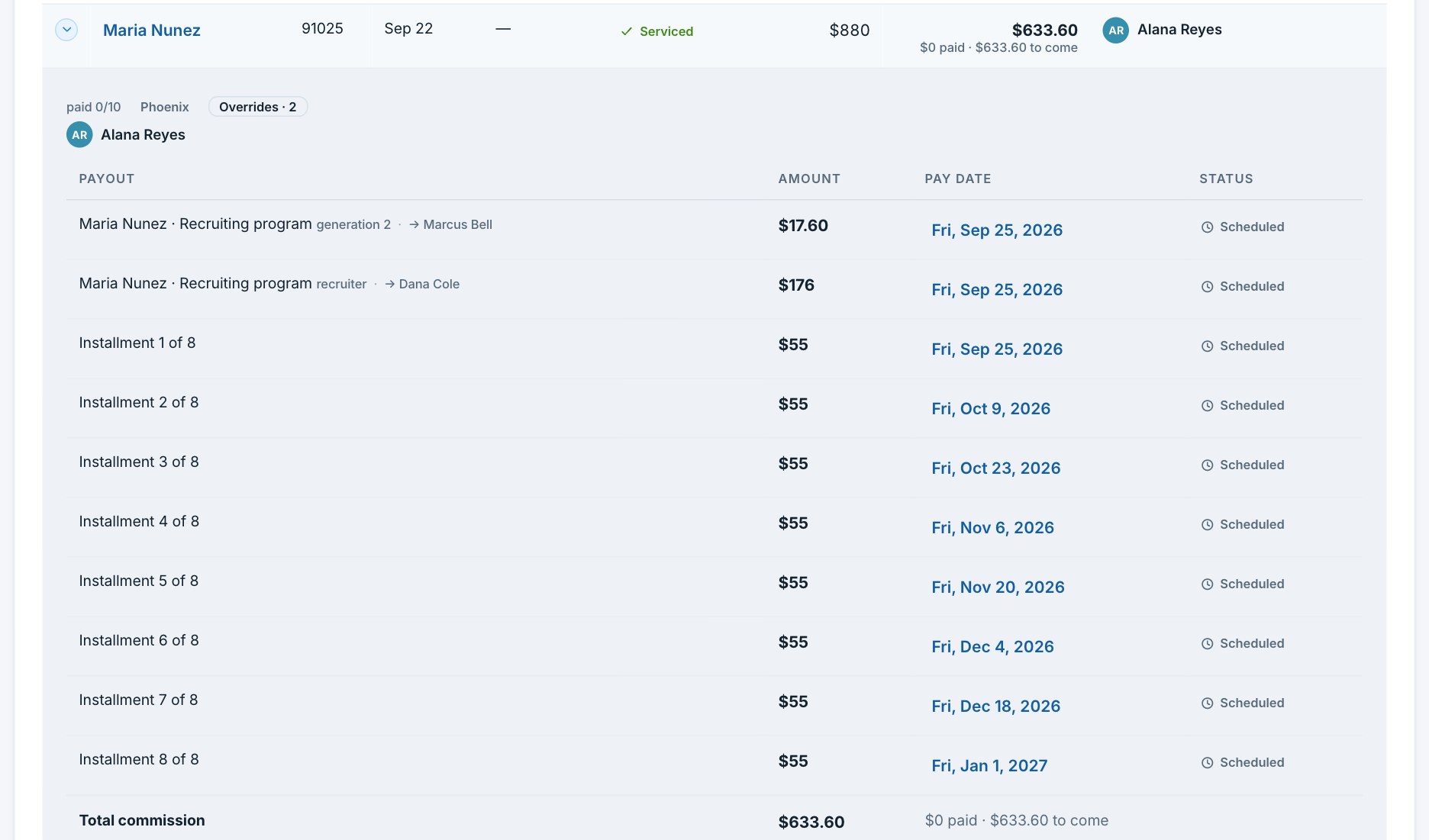
The day a sale is serviced, Swarm works out every payment that sale will ever produce, on every future payday, to the cent. Then it locks them.
The number a rep sees is the number they get. Change a pay plan in March and February's checks stay exactly as they were. If the CRM changes a value later, Swarm asks you what to do instead of quietly moving the money.
One sale, opened: every payment it will ever produce, each on its payday, locked the day it was serviced.
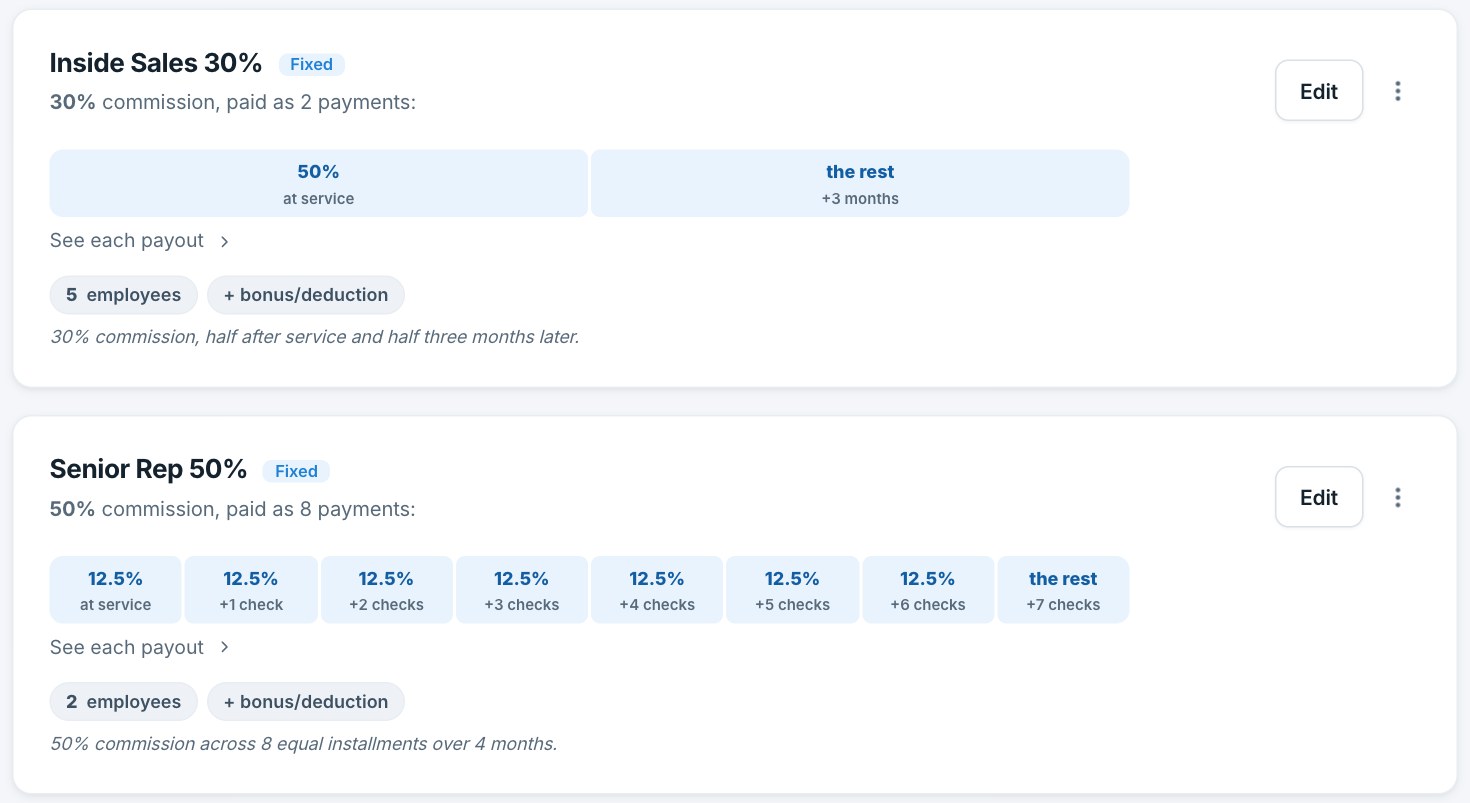
A rule has three parts: how much, when, and on what condition. Stack rules into the plan you actually run: a piece at service and the rest over months, rates that climb with the season, splits between reps, override pay for leaders and recruiters, bonuses, deductions, holds for accounts that fall behind.
You never simplify your pay plan to fit the software. And a plan that does not add up to 100% of the commission cannot be saved, so a check is never off by a piece.
Every plan draws its own payments. Change a rule and the picture moves with it.
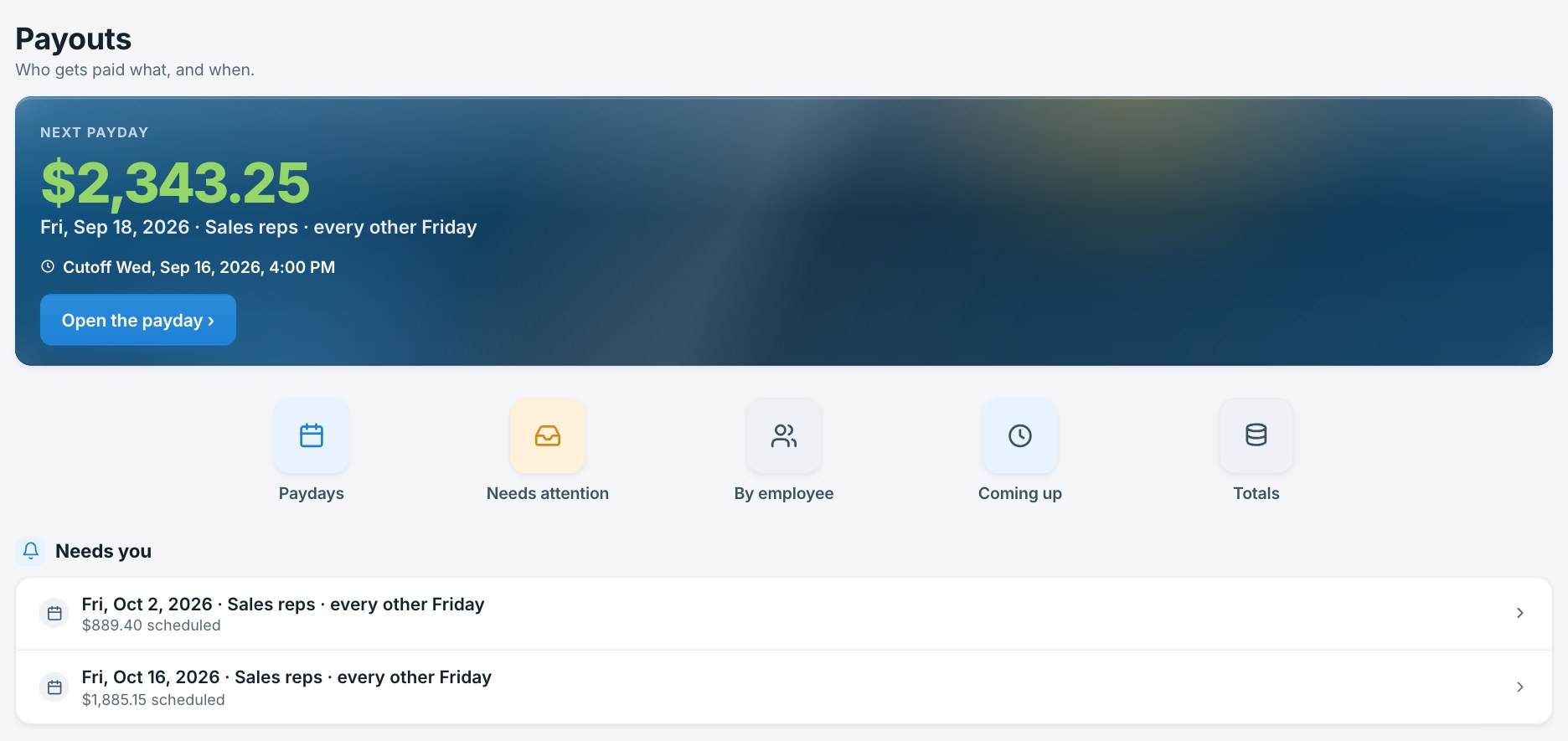
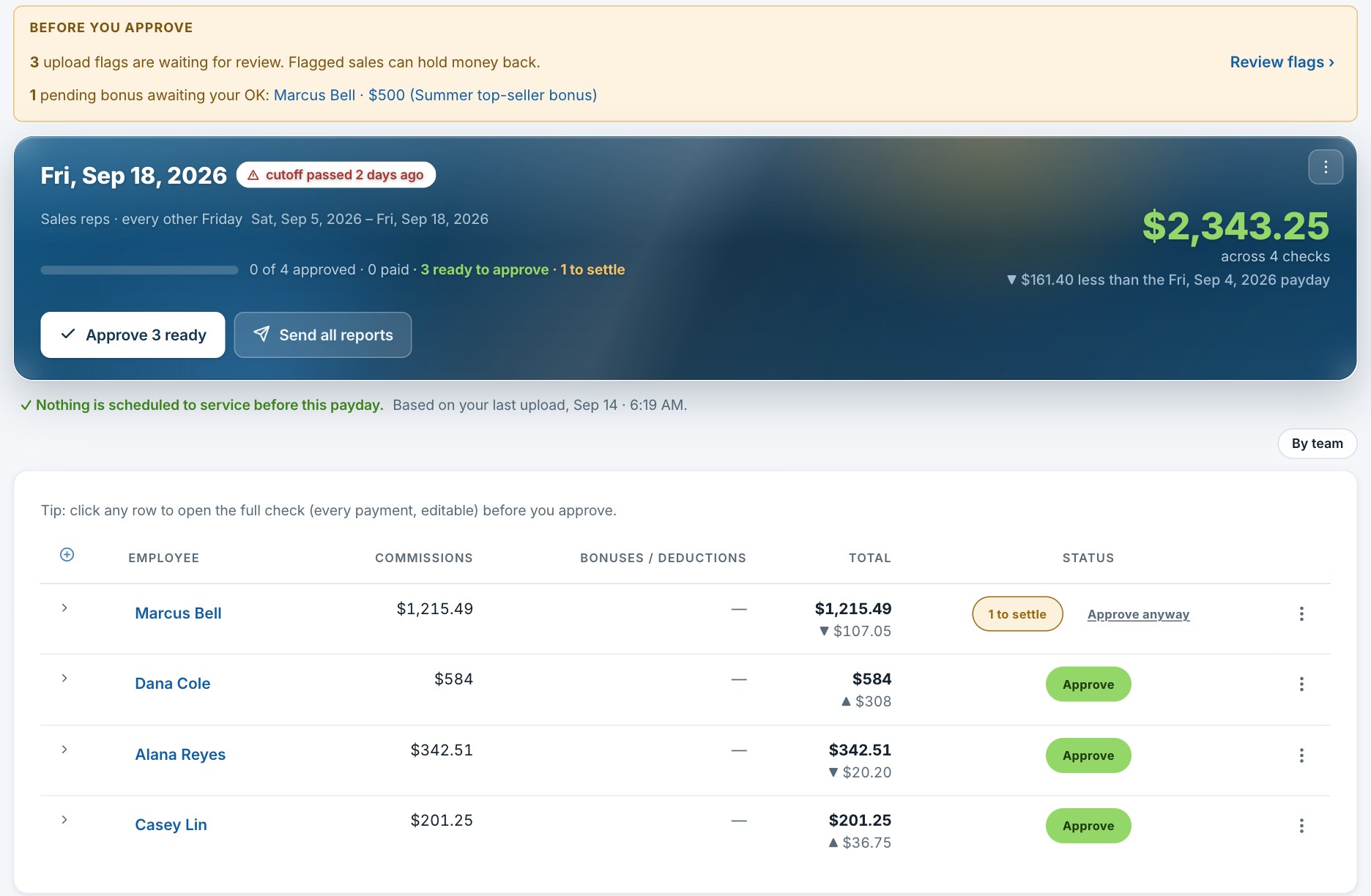
Every payday gathers its own checks. Open it and Swarm shows what changed since you last looked and what needs you: a bonus waiting for your OK, a flagged sale, a question from a rep. Approve one at a time, or all at once.
Each rep gets a PDF of exactly what they earned, sent on its own. Reminders reach whoever runs payroll. Pay dates step around weekends and bank holidays. You get your Fridays back.
One payday, open: what to look at first, then approve.
When a rep can see where every dollar came from, the Friday questions stop.
Commissions are the heart of it. Around them, everything a pest-control season takes, tied to the same numbers.
A booking link with your own questions. A prospect answers, picks a time, and lands on the board.
See it 2Your agreement, signed online, with their pay terms written into the PDF they sign.
See it 3Signed hires count down to their first day with their homework and the playbook.
See it 4Their sales match the day they are in. The first payday runs like every other.
See it 5The meetings a new hire gets after signing, on a schedule, with the notes on their record.
See it

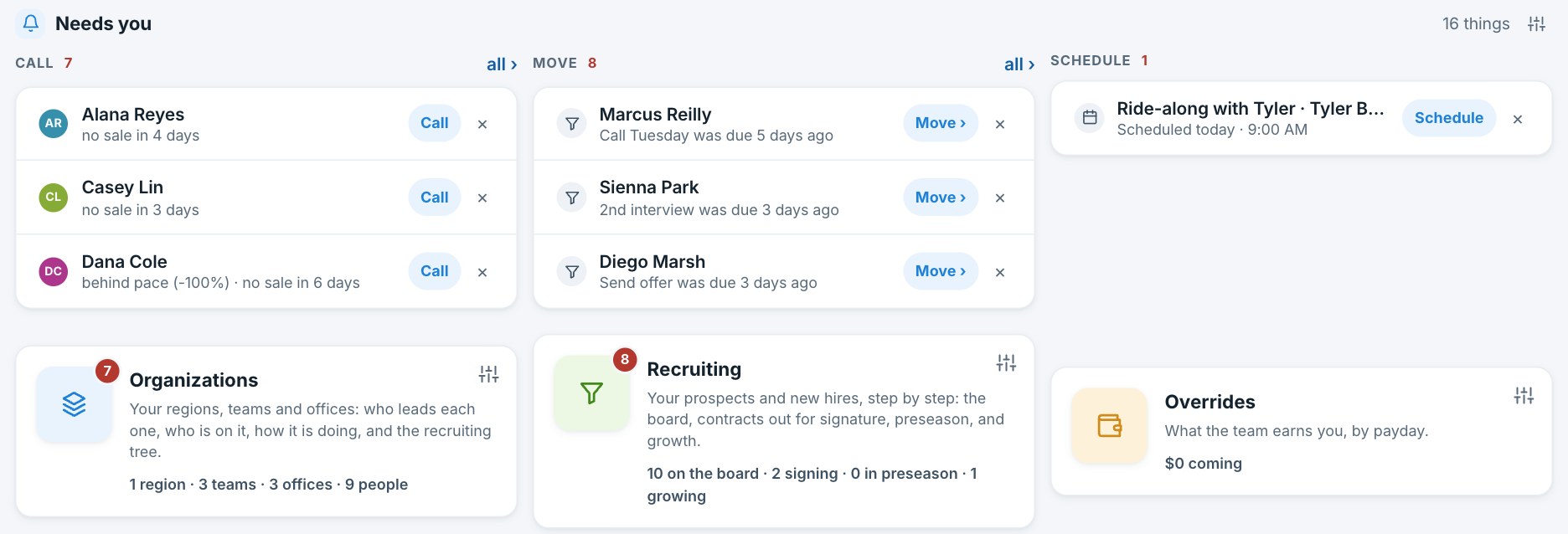
Regions, teams and offices under one login. A leader opens Swarm and sees who needs a call today, who is past a step, what the team sold, and what the team earns them.
Leadership
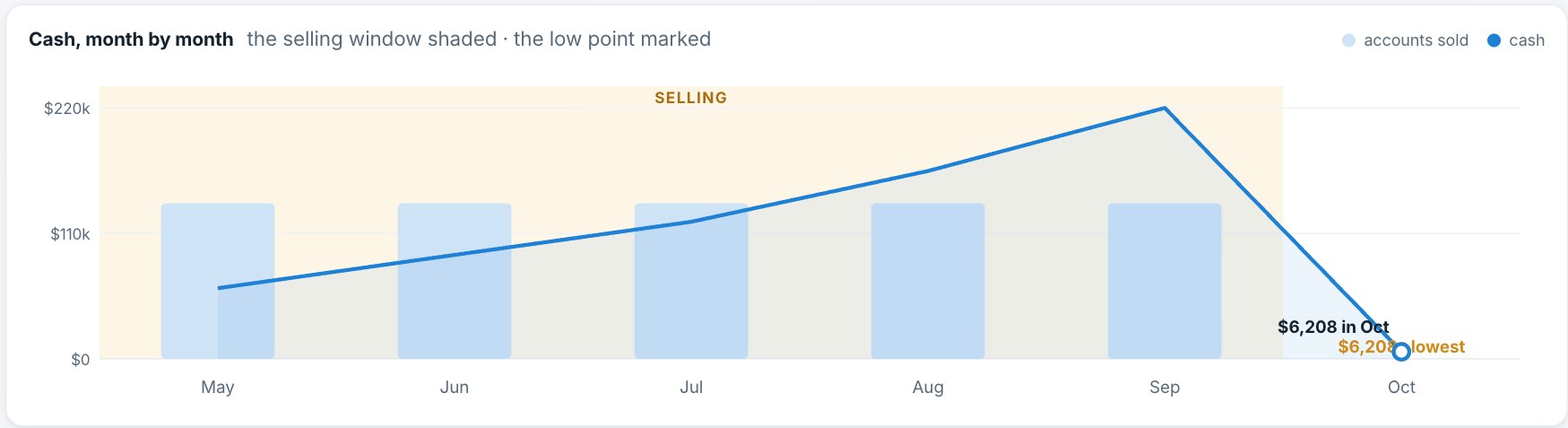
Forecast with your actual pay plans, packages and teams plugged in. Make it the plan, and the goals fill in from real sales as the season runs.
PlanningMost software makes you chase your own edits around. Swarm works out what a change means and does the rest.
It started with one owner’s commission day.
Every other Friday, hours in a spreadsheet, making sure the people who sold the season were paid right. Swarm ended that. Then it kept going: the recruit who books their own interview from a link, the agreement signed on a phone with the pay terms in it, the first thirty days on a schedule, the leader who opens one screen and knows who needs a call. One company’s payday became the place a pest-control sales team runs its season.
Tell us about your team and we will walk you through a working Swarm account. Ask whatever you want. Nothing to install, nothing to prepare.
Takes about thirty seconds, and you'll pick your demo time right after.
Your details are already filled in. Choose whatever works and you're done.
You can also open the scheduler in a new tab.